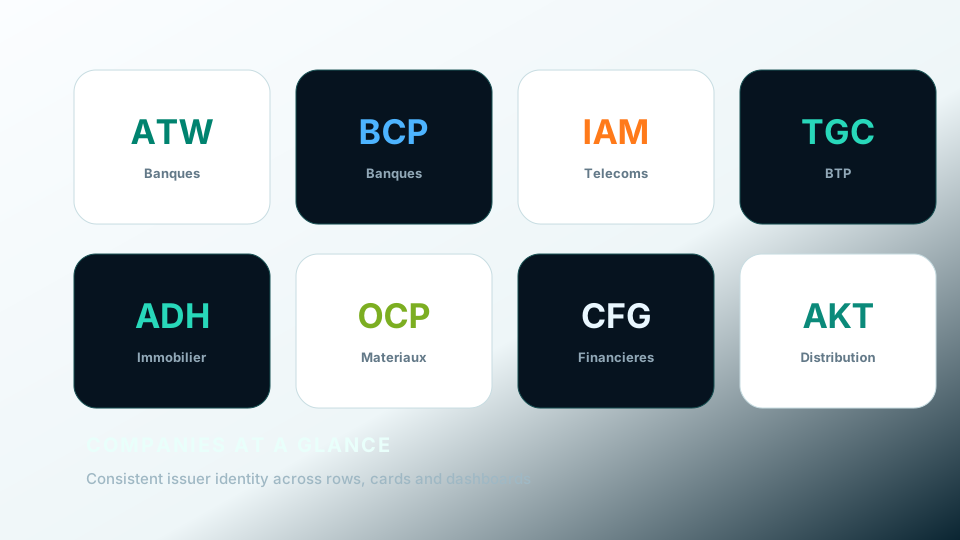
Logo and identity
Structured company references show a logo or verified monogram so the page is not a cold ticker list. This helps visitors recognize the issuer before opening its profile.
The public entry surface for stocks, leaders, and sector peers.
This page connects large caps, sector peer comparisons, rankings, and symbol pages for searches around listed Moroccan stocks.
Displayed names come from screener and active profile data, not a static SEO list.
Peer links prioritize comparable companies by sector and size.
Each symbol page can connect price, filings, news, dividends, and fundamentals.
The stock directory groups listed companies, logos, sectors, market-cap leaders, peer comparisons, and useful leaderboards. The goal is to make each name recognizable and guide users to the full profile: price, chart, filings, dividends, news, shareholders, and methodology notes.
Structured company references show a logo or verified monogram so the page is not a cold ticker list. This helps visitors recognize the issuer before opening its profile.
Suggested comparisons prioritize companies close by sector or size. They frame research questions around liquidity, valuation, dividends, filings, and recent momentum.
Gainers, decliners, volumes, and market caps are not enough. Internal links point to official filings, news, calendar, and glossary pages to clarify what each metric really measures.
This page organizes and links available data. It does not publish recommendations, target prices, or manufactured consensus. Any decision must be checked against your own context.
Borsalia connects the stock universe to common searches: dividends, volume, gainers, losers, calendar events, and official filings.
A stock list is useful only when it lets users move quickly into context. Borsalia connects each company with sectors, peers, rankings, filings, dividends, and available news. The goal is to turn a ticker into a usable research dossier.
Logos, monograms, and symbol links make companies recognizable without turning the page into a static catalogue. Comparisons remain cautious: two stocks in the same sector can still differ sharply in liquidity, leverage, reporting calendar, or distribution policy.
This page does not rank companies as recommendations. It helps users find the right entry points and verify several signals before interpreting a move.
See prices and session leaders.
Start by identifying what the page actually shows: prices, volume, allocation, calendar events, governance, or a period summary. A useful market read rarely comes from one indicator alone. The stronger workflow is to connect the main signal with two or three simple confirmations: market participation, recent filings, the relevant sector, and the behavior of comparable names.
Then separate observable facts from interpretation. A visible move can come from thin liquidity, reporting timing, sector rotation, or a one-off adjustment. Borsalia structures navigation so users can move from the broad view into symbol pages, rankings, calendar items, and useful definitions without turning an observation into a recommendation.
Finally, keep a verification mindset. If information is missing, if volume looks unusual, or if a change appears disconnected from the rest of the market, open the company page and compare several surfaces before concluding. Market pages are designed as starting points: they reduce noise, but they do not remove the need for judgement.
Check whether the move is concentrated in a few stocks or shared across several sectors.
A move without enough volume can look stronger than the underlying signal really is.
Use symbol pages, calendar events, filings, and news to connect the movement with published facts.
Always compare a company with its sector, peers, history, and displayed data limits.